



Cardano (ADA) Explained: What It Is and How It Works

Nowadays, cryptocurrencies have moved way beyond basic digital money. There are numerous blockchain projects, which offer various features, such as decentralized applications, smart contracts, and innovative financial instruments. One of the projects, which stands out among others due to its scientific approach and high level of security, scalability and sustainability is Cardano.
What is Cardano?
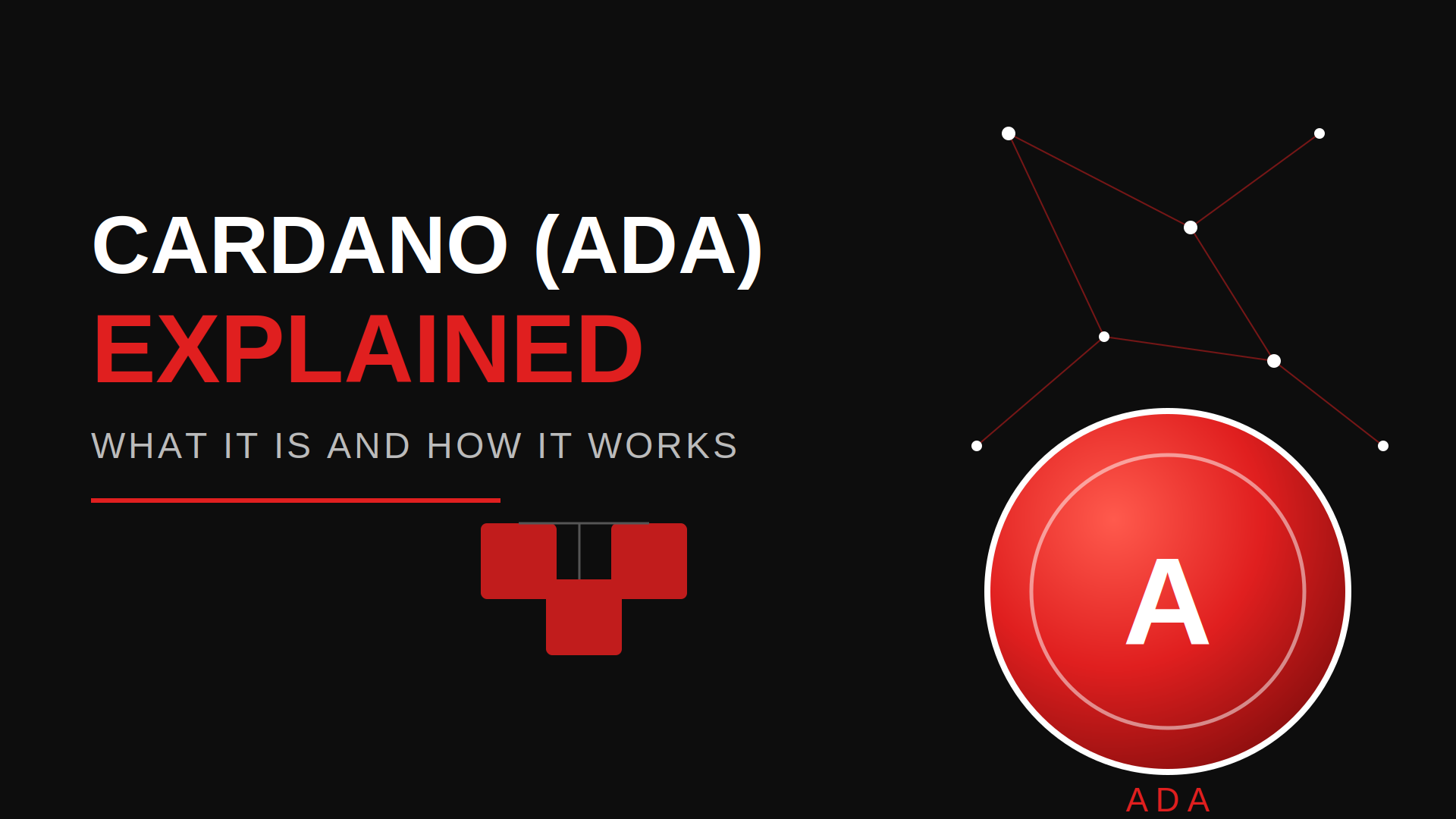
Cardano is a third-generation blockchain platform aimed at providing safe and scalable infrastructure for decentralized applications, smart contracts and digital assets. The project was launched in 2017 by Charles Hoskinson, one of the co-founders of Ethereum.
As opposed to many other projects in this sphere, Cardano applies a scientific approach. The technologies used in the project are developed as a result of peer-reviewed academic research and undergo thorough testing before implementation of the new functionality.
ADA is the name of the cryptocurrency of the Cardano network, which was named after Ada Lovelace, an outstanding mathematician and one of the first computer programmers of the world.
What Is ADA Used for?
ADA is the native coin of the Cardano network. Here are some main uses for ADA:
- For paying transaction fees on the Cardano network.
- For staking ADA to support the network security and earn rewards.
- To participate in governance processes when voting on future network upgrades.
- For sending and receiving digital money.
- To use dApps and smart contracts deployed on Cardano.
As the Cardano ecosystem develops, ADA becomes even more significant in many blockchain-based services.
How Does Cardano Work?
The main consensus protocol used by Cardano is Proof of Stake (PoS), also known as Ouroboros.
Unlike Proof of Work (like with Bitcoin), the network does not need energy-consuming mining operations. Cardano users may stake their ADA coins. Validators called stake pool operators will be responsible for transaction verification and creating new blocks.
The advantages of such consensus includes less energy consumption, faster transaction validation, better scalability with crypto and less environmental footprint. This way, the energy-efficiency makes Cardano quite an eco-friendly platform.
Key Features of Cardano
- Research-Based Development: Every major update to Cardano is based on academic research and peer-reviewed studies. This careful development process aims to improve security and reliability while reducing the likelihood of critical bugs.
- Smart Contracts: Cardano supports smart contracts, allowing developers to build decentralized applications such as DeFi platforms, NFT marketplaces, identity solutions, and blockchain games.
- Layered Architecture: Cardano separates its settlement layer (which handles transactions) from its computation layer (which runs smart contracts). This layered design helps improve flexibility and makes future upgrades easier.
- Scalability: The network is designed to process more transactions efficiently as adoption increases. Ongoing upgrades aim to improve throughput while maintaining decentralization.
- Low Transaction Costs: Compared to many blockchain networks, Cardano generally offers relatively low transaction fees, making it attractive for developers and users alike.
Benefits of Cardano
Cardano offers several advantages for both users and developers:
- Energy-efficient blockchain powered by Proof of Stake.
- Strong focus on security through peer-reviewed research.
- Supports smart contracts and decentralized applications.
- Lower transaction fees than many competing networks.
- Growing ecosystem with active community development.
- Opportunities to earn passive income through staking ADA.
Risks to Consider
Like every cryptocurrency, Cardano also comes with certain risks:
- ADA prices can be highly volatile.
- Adoption has been slower compared to some competing blockchains.
- The long research and testing process can delay feature releases.
- Competition from platforms like Ethereum, Solana, and Avalanche remains strong.
Investors should always conduct their own research before purchasing any cryptocurrency.
Is Cardano a wise investment for you?
The answer to the question whether Cardano is a wise investment lies in personal financial priorities and risk aversion. Many people value Cardano due to its strategic thinking, sustainable blockchain technology, and research-based development. However, some are concerned with the fierce competition in blockchain technologies and volatility of cryptocurrencies’ market.
Instead of basing your judgment solely on the price fluctuations, many ADA holders consider Cardano to be a long-term project for building blockchain infrastructure.
Cardano is probably one of the most promising blockchain projects in the field of cryptocurrency. Based on scientific research and working under the Proof of Stake consensus algorithm, Cardano seeks to build a reliable, scalable, and sustainable environment for decentralized apps and digital currencies.
ADA is used to conduct transactions on Cardano, stake coins, participate in governance, and take part in the rapidly developing Cardano ecosystem.
FAQs
What exactly does Cardano do?
Cardano is a decentralized, proof-of-stake blockchain platform used to build smart contracts, decentralized applications (dApps), and new digital tokens. Its native cryptocurrency, ADA, is used to pay for network transaction fees, stake to secure the blockchain for rewards, and participate in on-chain community governance.
What is the purpose of Cardano (ADA) coin?
ADA is the native cryptocurrency of the Cardano blockchain. It functions primarily as a medium of exchange, a mechanism to secure the network through staking, and a governance tool for protocol upgrades.
Will ADA ever reach $1?
Reaching $1 is theoretically possible for Cardano (ADA) but will require a significant market rally, as prices have recently fluctuated at lower levels. While the $1 threshold is a key target, analyst forecasts and community sentiments are highly mixed regarding when or if ADA will break that barrier.
Does Cardano make money?
The current estimated reward rate of Cardano is 1.39%. This means that, on average, stakers of Cardano are earning about 1.39% if they hold an asset for 365 days. The reward rate has not changed over the last 24 hours. 30 days ago, the reward rate for Cardano was 1.51%.